EN

The Voice of Istria in the Diet and the Imperial Council

In 1857, he was appointed Bishop of Poreč and Pula, becoming the first Croat of modern times to hold a bishop’s seat and the first to address his inaugural pastoral letter to the faithful also in the Croatian language. As Bishop of Poreč and Pula, Juraj Dobrila was also a member of the Imperial Council in Vienna (1861–1873), where he drew attention to the difficult economic situation of the Istrian countryside.
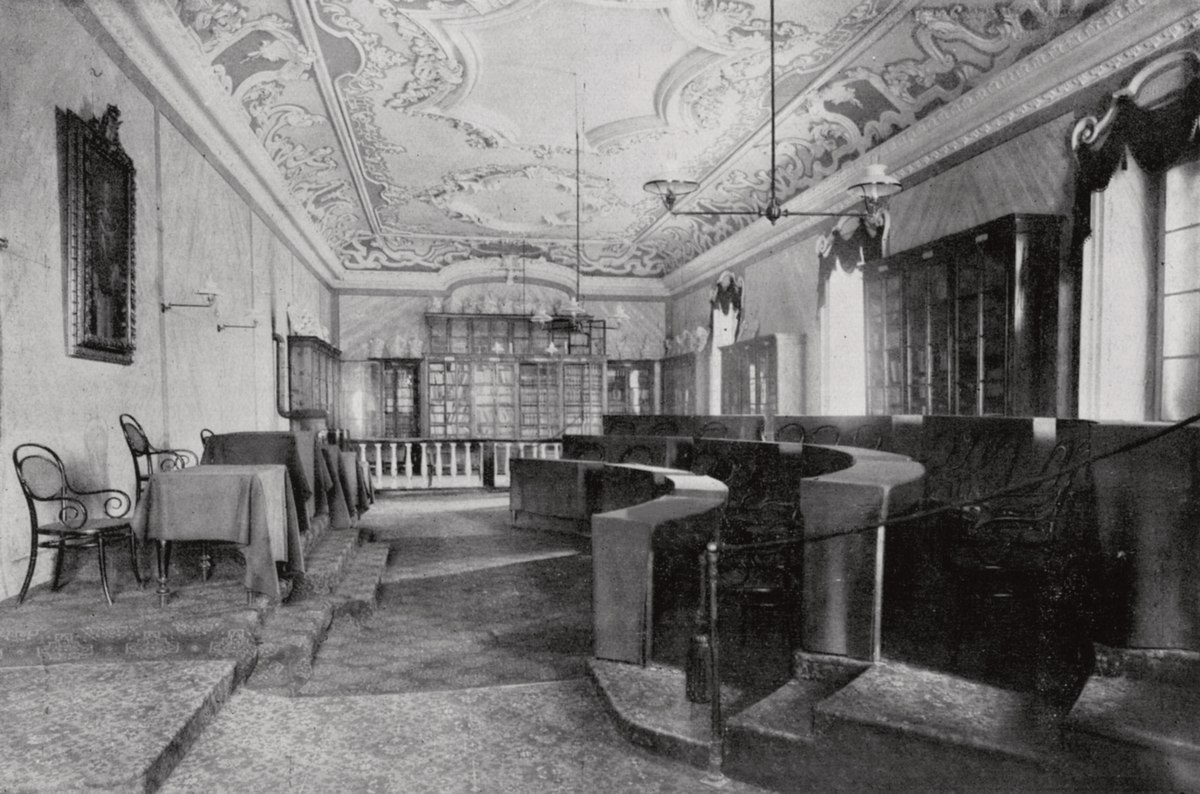
Old black-and-white photograph of the interior of an assembly hall. The ceiling is richly painted with Baroque ornament, and lamps hang from it. On the right are dark wooden benches arranged in a semicircle and separated by a rope, and on the left are tables covered with cloth and bentwood chairs. Tall bookcases stand along the walls and at the end of the hall, and a large framed painting hangs on the left wall.
Interior of the assembly hall of the Istrian Diet in Poreč (today the Istrian Assembly Hall) Source: Giovanni Quarantotti, Istria del risorgimento: Storia della Dieta del nessuno, G. Coana & Figli, Parenzo, 1938, p. 97

From the establishment of the Istrian Diet in 1861 until his death, Juraj Dobrila was its virile member (a member by virtue of office), although from 1867 he no longer participated in its work. During the sessions of the Istrian Diet, he advocated the introduction of the Croatian and Slovenian languages in schools and their equality with the Italian language, as well as the economic advancement of rural areas, the regulation of land registers, assistance in the construction of churches and other matters of importance to the population of Istria.
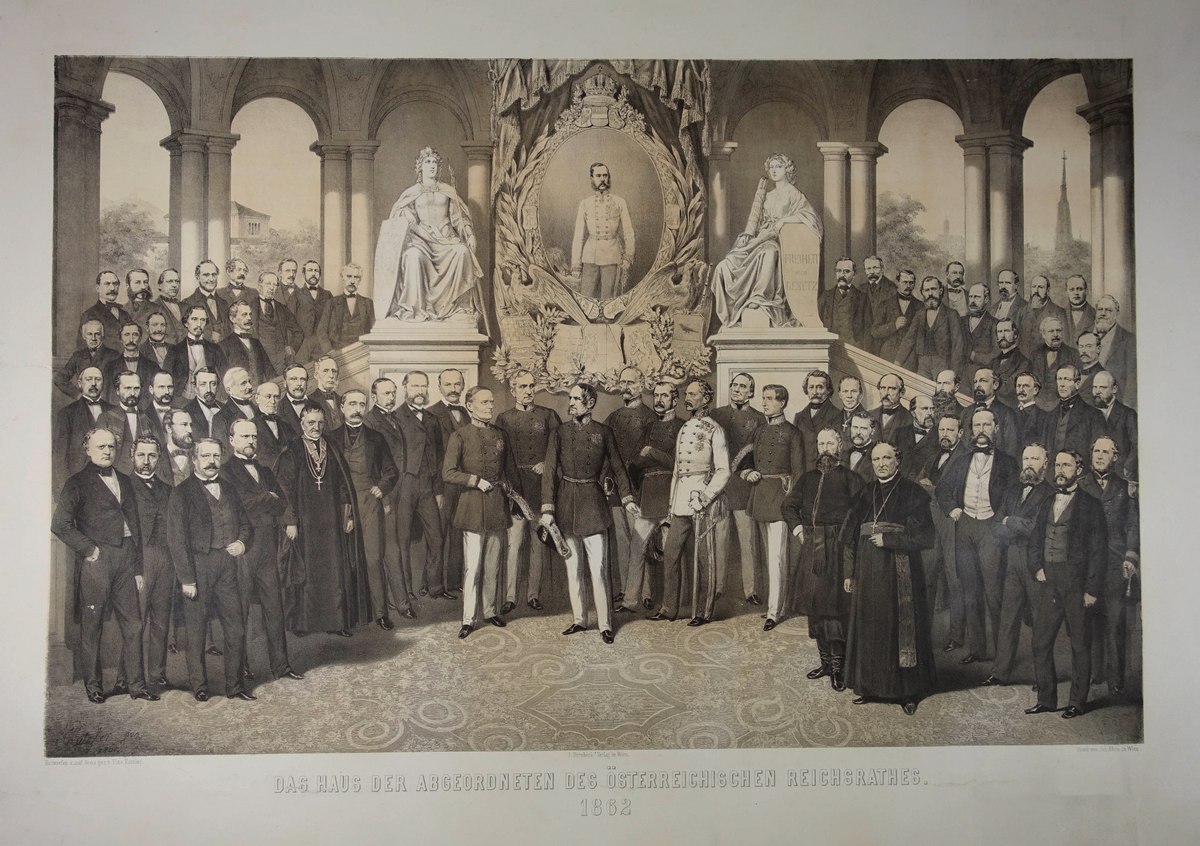
Large tinted lithograph showing a group of dozens of men in formal dress, in a hall with columns and arches. In the centre, in a richly decorated frame, is a portrait of the emperor in uniform, flanked by two large statues of seated female figures. In the front row, among deputies in civilian dress, stand men in uniform and clergymen in long robes with crosses on their chests. At the bottom is a German inscription with the year 1862.
The House of Deputies of the Austrian Imperial Council, 1862, tinted lithograph by Vinzenz Katzler; printed by Johann Klein, J. Dirnböck, Vienna Source: https://www.zvab.com/30668376912/bd